0
Login Wishlist Cart 0
You Have the Power to Save a Life.

Do You Know What Protects You When You Act?

Understanding Good Samaritan laws isn't just about legal safety—it's about removing the fear that stops people from helping when seconds count.
Bystander action is critical to survival in cardiac arrest, severe bleeding, and trauma emergencies. Only ~41-42% of cardiac arrest victims receive bystander CPR—yet those who do have dramatically better survival rates. Why? You're already there, and every minute counts.
The #1 barrier to helping? Fear of getting sued.
This page gives you the facts:
  • What you're legally protected to do
  • What crosses the line
  • Why the law is designed to encourage action, not punish it
Save Lives
Legal Protection
Seconds Count

Why Understanding Good Samaritan Laws Saves Lives

Someone collapses. Bleeding won't stop. An accident happens.
Your instinct says help. Your fear says:
  • "What if I do wrong?"
  • "Can they sue me?"
  • "Should I just call 911?"
That hesitation kills.
The Facts:
  • Bystander CPR doubles or triples survival rates
  • Quick tourniquet use = life vs death
  • Not knowing the law = people freeze
Good Samaritan laws solve this.
What you don't know:
  • Laws vary by state
  • 3 states require you to help
  • AED use has special protections
  • Training matters in 6 states
This page = your legal roadmap to saving lives.

CPR, Bleeding Control & Trauma Care: What Good Samaritan Laws Cover

Three critical interventions. Here's what's protected:

CPR & AED Use

What's Typically Covered:
  • Performing chest compressions (even if you break ribs—a common and unavoidable result of proper CPR)
  • Using an AED (all 50 states provide civil liability protection for AED users acting in good faith)
  • Rescue breathing or hands-only CPR
  • Minor technique errors like incorrect hand placement or compression rate, as long as you're trying to follow your training
Why It Matters:
  • Survival drops significantly within minutes without CPR
  • Bystander CPR begun within 2 minutes linked to 81% higher odds of survival to discharge
  • Law encourages action, not perfection

Bleeding Control & Hemorrhage Management

What's Typically Covered:
  • Direct pressure on wounds
  • Tourniquet application on limbs
  • Wound packing with gauze (including hemostatic gauze)
  • Using Stop the Bleed training techniques
Why It Matters:
  • Bleeding can kill in minutes
  • Civilian tourniquets: zero mortality in mass‑casualty events
  • Tourniquets = legal, safe, protected

Basic Trauma Care

What's Typically Covered:
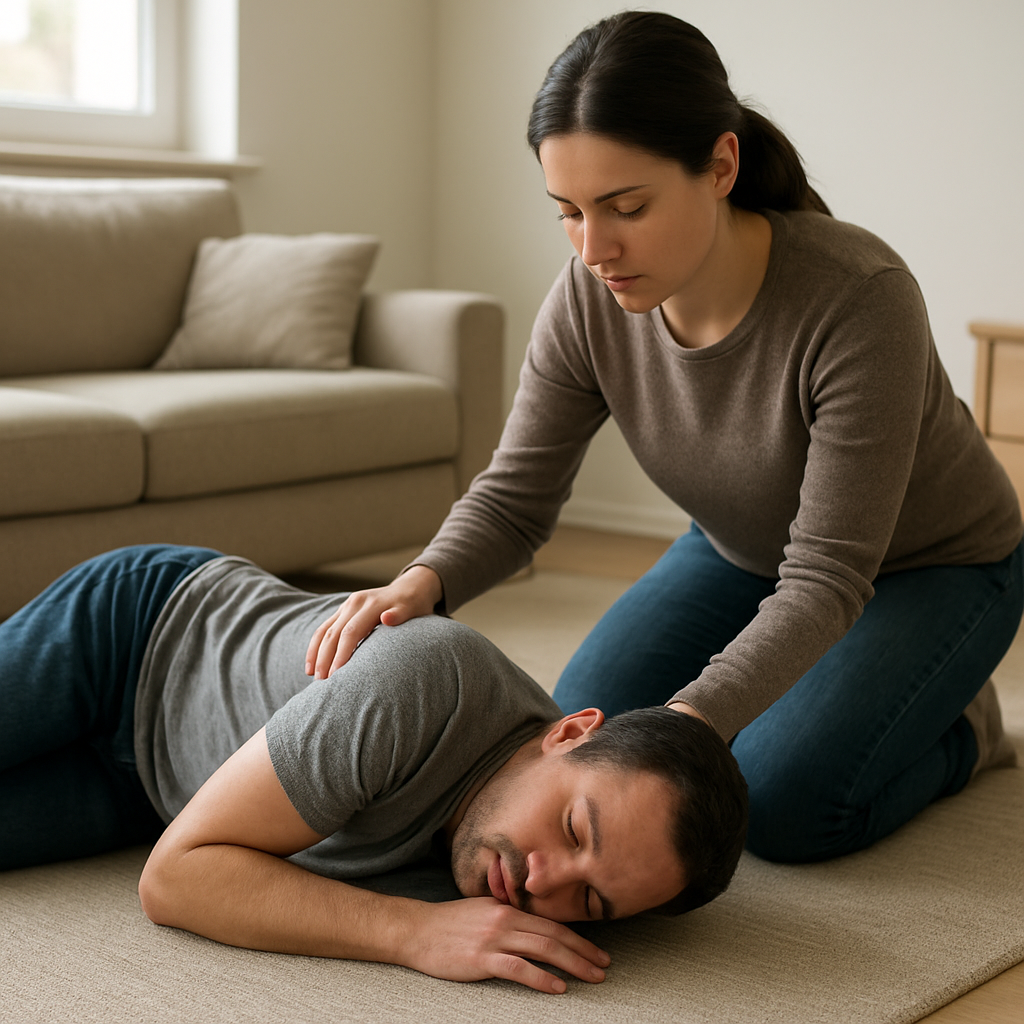
  • Airway management (jaw‑thrust, head‑tilt‑chin‑lift, recovery position)
  • Scene safety assessment and calling 911
  • Preventing shock (positioning, keeping warm)
  • Stabilizing suspected fractures
  • Basic wound care
Why It Matters:
  • Minutes before EMS = critical window
  • Simple actions prevent death: clear airway, stop bleeding, recovery position

Real People. Real Saves. Real Legal Protection.

These aren't hypotheticals. These are documented cases where civilians saved lives—and the law protected them when they did.

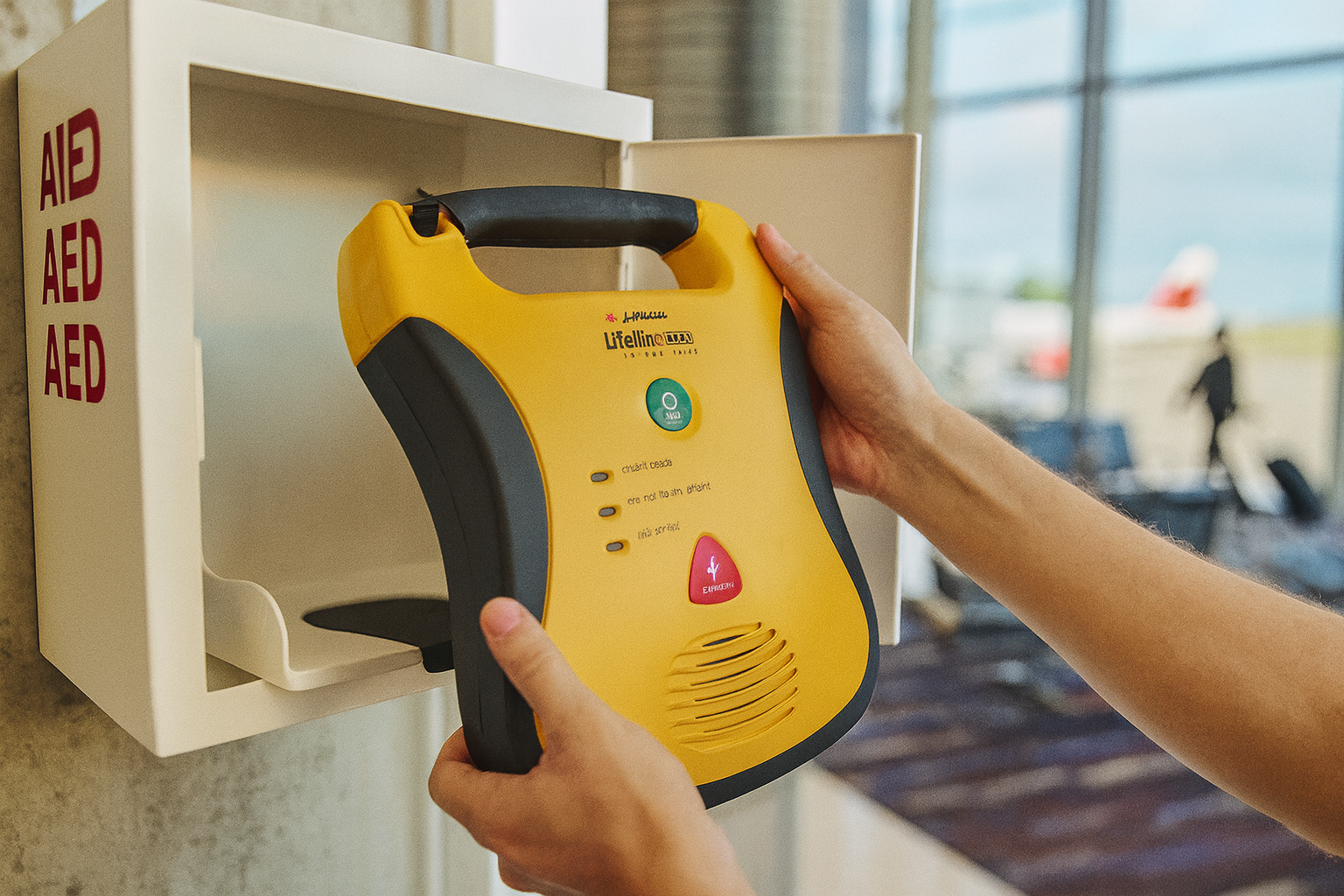
Buffalo Airport (April 2025)

What Happened:
Traveler Phil Clough saw woman collapse → immediate CPR + AED → heart restarted before EMS.
Outcome:
Woman survived. Phil celebrated. Zero legal consequences.
Protected By:
  • Good faith
  • Public AED use (federal + state protection)
  • No payment accepted
Law: NY Pub. Health Law § 3000-a + Federal 42 USC § 238q

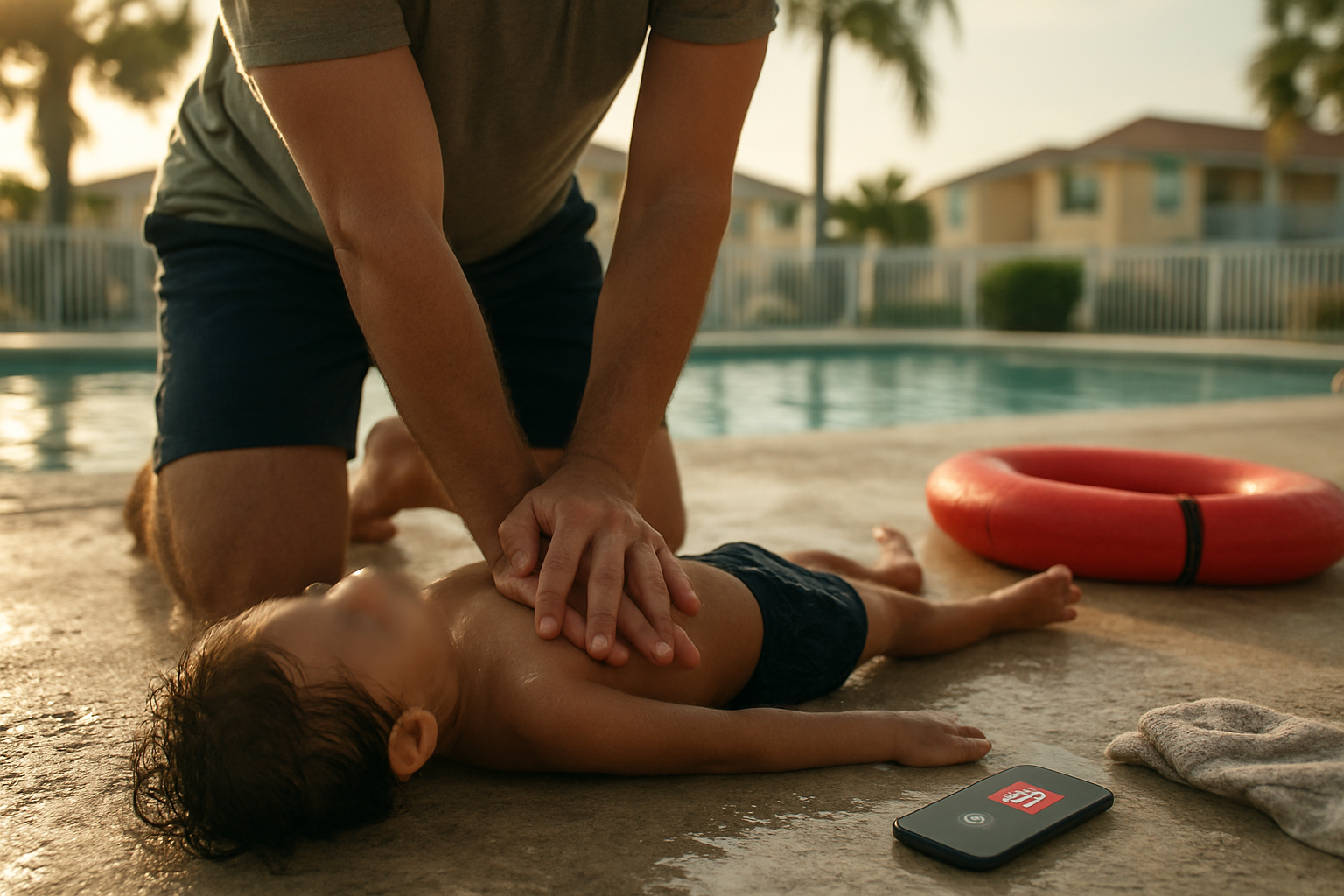
Fort Lauderdale Pool Rescue (June 2025)

What Happened:
Bystander Roque Ivan Ocampo heard screams, dove into the pool, pulled the drowning child out, and performed CPR until the 6‑year‑old was breathing again.
Outcome:
Child survived and recovered. Zero legal consequences for rescuer.
Protected By:
  • Emergency situation
  • Good‑faith CPR
  • No compensation
Law: Florida Statute § 768.13

Boston Marathon Bombing (April 2013)

What Happened:
Bystanders applied 26‑27 tourniquets to bomb victims. Many had no medical training.
Outcome:
Zero in‑hospital deaths among tourniquet recipients. Zero legal consequences for rescuers.
Protected By:
  • Life‑threatening emergency
  • Good‑faith bleeding control
  • No payment expected
Law: MA Gen. Laws Ch. 112, § 12V

Las Vegas Shooting (October 2017)

What Happened:
Off‑duty Army sergeant used Combat Lifesaver training → improvised tourniquet → saved victim with leg bleeding.
Outcome:
Victim survived. Soldier formally awarded. Zero legal issues.
Protected By:
  • Mass‑casualty emergency
  • Acted within training
  • Voluntary aid
Law: Nevada Good Samaritan statute (NRS 41.500)

Minnesota Farm Accident (Recent)

What Happened:
Man suffered hay‑baler amputation → spouse applied tourniquet from home bleeding kit → saved his life.
Outcome:
Husband survived. Physicians credited tourniquet. Zero legal issues.
Protected By:
  • Life‑threatening home emergency
  • Good‑faith tourniquet use
  • MN's duty‑to‑assist law protected and encouraged action
Law: Minnesota Statute § 604A.01

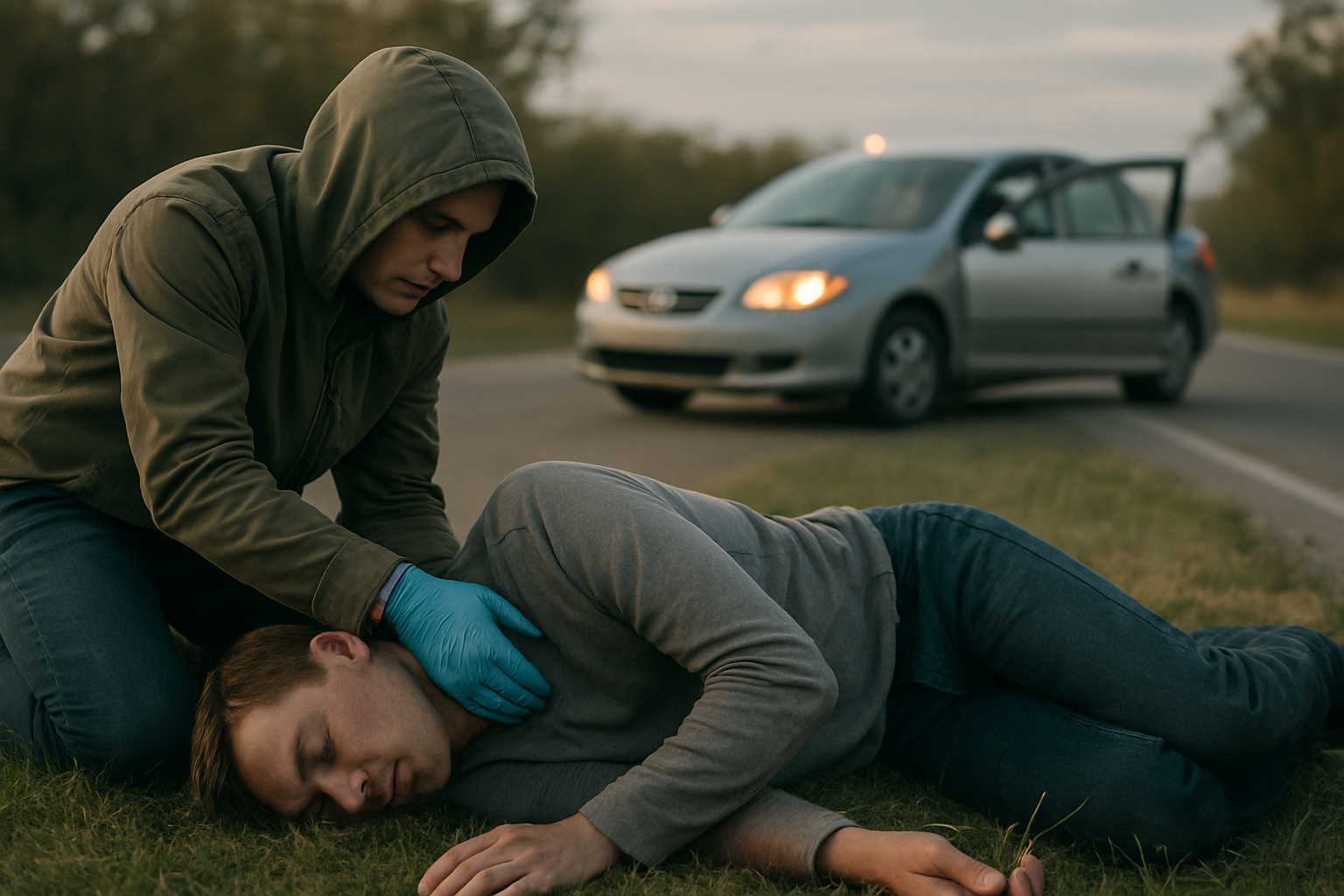
North Carolina Crash (March 2024)

What Happened:
After crash, bystander found passenger not breathing → cleared airway → mouth‑to‑mouth → controlled bleeding. Breathing restored.
Outcome:
Victim recovered. Crash lawsuit settled $550K—rescuer never sued.
Protected By:
  • Emergency care at scene
  • Good‑faith effort
  • Airway + bleeding control = first aid
Law: NC Gen. Stat. § 90-21.14

Common Thread: All 6 Rescuers...

Good faith action
No payment
Emergency scene
Within training scope
Fully protected

The Law Worked Exactly as Intended.

Where You Stand: The US State‑by‑State Legal Landscape

All 50 states + DC have protections—but details vary. Some are broad. Others require training or have conditions.

At‑a‑Glance: Best & Most Problematic States

Strongest Protection States
California
  • Medical + nonmedical care
  • Gross negligence standard
  • Strengthened 2009
Texas
  • Broad "emergency care"
  • No training required
  • AED explicitly included
Utah
  • Very broad definitions
  • Gross negligence standard
Arizona
  • Protects "any person"
  • Good faith standard
Minnesota
  • Broad immunity + duty to assist
Vermont
  • Broad immunity + duty to assist
  • Calling 911 = compliance
Watch Out States
AED Use - Training Required:
🟡 Rhode Island | 🟡 Illinois | 🟡 New York
Untrained AED users may have limited immunity
Bleeding Control - Training May Be Required:
🟡 Connecticut | 🟡 Illinois | 🟡 Kansas | 🟡 Kentucky | 🟡 Michigan | 🟡 Missouri
Statute language may narrow protection to trained rescuers
Explicit Bleeding Control Language:
🟢 Oklahoma explicitly names "preventing/retarding loss of blood" in statute
Key Takeaways
  • CPR protected best → AED/CPR near‑universal; bleeding control varies
  • Training matters in 6‑9 states → CT, IL, KS, KY, MI, MO, NY, RI
  • 3 states require help → MN, VT, RI (call 911 counts)
  • Federal AED protection → 42 USC § 238q covers all states

Complete 50‑State + DC Legal Reference

Find your state. Know your protection.
Legend:
Broad protection
Limitations/training required
Gaps/unclear
State CPR/AED Protection Bleeding Control Protection Trauma Care Protection Key Notes & Gaps
Alabama ✅ AED use protected under federal + state law ✅ Covered under general emergency aid ✅ Covered under general emergency aid Federal AED protections apply
Alaska ✅ AED use protected under federal + state law ✅ Covered under general emergency aid ✅ Covered under general emergency aid Federal AED protections apply
Arizona ✅ Broad; protects "any person"; gross negligence standard ✅ Covered under "emergency aid" ✅ Covered under "emergency aid" Among the strongest, broadest protections
Arkansas ✅ AED use protected under federal + state law ✅ Covered under emergency aid ✅ Covered under emergency aid Federal AED protections apply
California ✅ Very broad; medical AND nonmedical emergency care; gross negligence standard ✅ Explicitly protected post‑2009 amendment ✅ Explicitly protected post‑2009 Strengthened in 2009 after Van Horn case
Colorado ✅ AED immunity and program duties; general Good Samaritan law protects emergency aid ✅ Covered under emergency aid ✅ Covered under emergency aid AED placement/maintenance requirements
Connecticut ✅ AED protection 🟡 Training may be required for full immunity 🟡 Training may be required for full immunity Applies to trained persons/clinicians primarily
Delaware ✅ AED use protected ✅ Covered under emergency aid ✅ Covered under emergency aid Federal AED protections apply
Florida ✅ Broad protection; AED immunity ✅ Covered under emergency aid ✅ Covered under emergency aid Cardiac Arrest Survival Act protections
Georgia ✅ AED operator/trainer/property immunity ✅ Covered under emergency aid ✅ Covered under emergency aid AED program framework
Hawaii ✅ AED protection ✅ Covered under emergency aid ✅ Covered under emergency aid Federal AED protections apply
Idaho ✅ AED/CPR immunity ✅ Covered under emergency aid ✅ Covered under emergency aid Federal AED protections apply
Illinois 🟡 AED training required for full immunity 🟡 May require training 🟡 May require training Narrower protection for untrained users
Indiana ✅ AED protection ✅ Covered under emergency aid ✅ Covered under emergency aid Federal AED protections apply
Iowa ✅ AED immunity for reasonable/good faith use ✅ Covered under emergency aid ✅ Covered under emergency aid AED maintenance rules updated 2025
Kansas ✅ Healthcare and non‑healthcare provider protections 🟡 May require training 🟡 May require training Separate provisions for trained vs untrained
Kentucky ✅ Protects CPR‑certified persons; AED immunity 🟡 May require training 🟡 May require training Certification language creates uncertainty
Louisiana ✅ Broad; covers first aid/CPR; AED volunteer provisions ✅ Covered under first aid/emergency care ✅ Covered under first aid/emergency care General Good Samaritan protection
Maine ✅ Immunity for first aid/emergency treatment ✅ Covered under emergency treatment ⚠️ No specific statute for advanced trauma care Rely on broad emergency aid language; common law applies
Maryland ✅ Emergency medical care; includes lay assistance with conditions ✅ Covered under emergency medical care ✅ Covered under emergency medical care Conditions apply; review statute for specifics
Massachusetts ✅ CPR/defibrillation explicitly protected; AED programs ✅ Covered under emergency care ✅ Covered under emergency care Strong protections affirmed in Boston Marathon case
Michigan ✅ CPR/AED protection for layperson 🟡 Bleeding control not explicitly protected 🟡 Bleeding control not explicitly protected Bleeding control legislation pending; CPR/AED clearly protected
Minnesota ✅ Broad immunity + duty to assist ✅ Covered under duty to assist/immunity ✅ Covered under duty to assist/immunity Duty to provide reasonable assistance (e.g., call 911)
Mississippi ✅ Includes AED use in Good Samaritan law ✅ Covered under emergency aid ✅ Covered under emergency aid Broad protection
Missouri ✅ General Good Samaritan + AED protections 🟡 May require training 🟡 May require training Training may be required for full immunity
Montana ✅ General emergency aid immunity ✅ Covered under emergency aid ✅ Covered under emergency aid Broad protection; also overdose immunity
Nebraska ✅ General emergency aid immunity ✅ Covered under emergency aid ✅ Covered under emergency aid Broad protection
Nevada ✅ AED/emergency aid protected ✅ Covered under emergency aid ✅ Covered under emergency aid Affirmed in Las Vegas shooting case
New Hampshire ✅ General emergency aid; physician‑specific provisions ✅ Covered under emergency aid ✅ Covered under emergency aid Broad protection
New Jersey ✅ Broad emergency aid ✅ Covered under emergency aid ✅ Covered under emergency aid Protects individuals and rescue squad volunteers; excludes in‑hospital for non‑employees
New Mexico ✅ General emergency aid immunity ✅ Covered under emergency aid ✅ Covered under emergency aid Broad protection
New York 🟡 AED training may be required for immunity in some contexts ✅ Covered under emergency care ✅ Covered under emergency care AED program requirements; training requirements vary
North Carolina ✅ Broad emergency care at accident scenes ✅ Covered under emergency care ✅ Covered under emergency care Affirmed in NC crash case
North Dakota ✅ Scene of emergency coverage ✅ Covered under emergency aid ✅ Covered under emergency aid Broad protection
Ohio ✅ Broad emergency care; includes nonmedical rescue ✅ Covered under emergency care ✅ Covered under emergency care Ohio courts affirmed nonmedical rescue protection
Oklahoma ✅ Broad emergency care Explicitly mentions "preventing/retarding loss of blood" ✅ Covered under emergency care Statute explicitly protects bleeding control measures
Oregon ✅ General emergency aid immunity ✅ Covered under emergency aid ✅ Covered under emergency aid Broad protection
Pennsylvania ✅ CPR/AED protected; good faith standard ✅ Covered under emergency care ✅ Covered under emergency care Immunity doesn't create duty to have AED
Rhode Island 🟡 AED training required ✅ Covered under emergency aid ✅ Covered under emergency aid Duty to assist required (failing to render aid is petty misdemeanor); AED training required
South Carolina ✅ General emergency aid immunity ✅ Covered under emergency aid ✅ Covered under emergency aid Broad protection
South Dakota ✅ General emergency aid immunity ✅ Covered under emergency aid ✅ Covered under emergency aid Broad protection
Tennessee ✅ General emergency aid immunity ✅ Covered under emergency aid ✅ Covered under emergency aid Broad protection
Texas ✅ Very broad; includes AED; willful/wanton standard ✅ Covered under "emergency care" ✅ Covered under "emergency care" Among strongest protections; schools mandated to have bleeding control kits
Utah ✅ Very broad emergency and emergency care definitions ✅ Covered under emergency care ✅ Covered under emergency care Among strongest, broadest protections
Vermont ✅ Broad immunity + duty to assist ✅ Covered under duty/immunity ✅ Covered under duty/immunity Duty to provide reasonable assistance
Virginia ✅ General emergency aid immunity ✅ Covered under emergency aid ✅ Covered under emergency aid Broad protection
Washington ✅ General emergency aid immunity ✅ Covered under emergency aid ✅ Covered under emergency aid Schools adopting bleeding control protocols
West Virginia ✅ General emergency aid immunity ✅ Covered under emergency aid ✅ Covered under emergency aid Broad protection
Wisconsin ✅ General emergency aid immunity ✅ Covered under emergency aid ✅ Covered under emergency aid Broad protection
Wyoming ✅ General emergency aid immunity ✅ Covered under emergency aid ✅ Covered under emergency aid Broad protection
Washington, DC ✅ General emergency aid immunity ✅ Covered under emergency aid ✅ Covered under emergency aid Follows federal protections; local provisions apply
Note: All states: good faith + unpaid = protected. Gross negligence excluded. Current as of January 2026.

Good Samaritan Laws Beyond the US

Rescuer protection exists worldwide—but frameworks differ. Here's what matters.

CANADA

Provincial laws. Generally: protect good‑faith, unpaid volunteers unless grossly negligent.
🇨🇦 British Columbia
  • Broad protection at scene
  • Gross negligence standard
  • No paid aid
🇨🇦 Ontario
  • Lay rescuers + professionals protected
  • Good Samaritan Act + AED‑specific protections
  • Site owners/occupiers providing AED protected if maintained properly
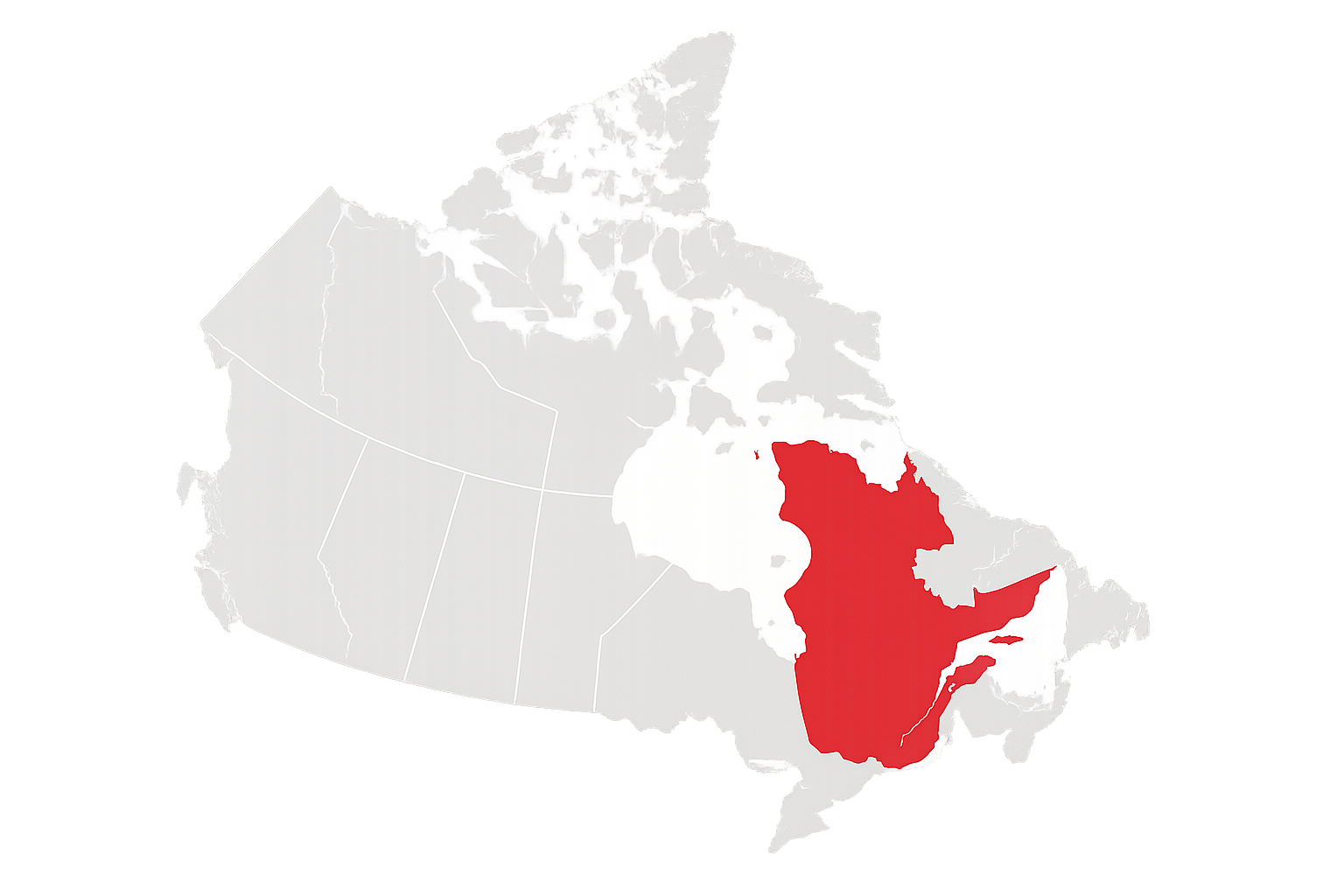
🇨🇦 Quebec
  • DUTY TO RESCUE → failing to help = illegal
  • Rescuers protected unless gross fault
  • Must help or call for help
🇨🇦 Alberta
  • Broad protection for volunteers providing first aid in good faith
  • Gross negligence standard
  • Not for compensated aid
Canada Takeaway:
Most provinces protect volunteers. Quebec requires you to help.

bigben -london UNITED KINGDOM

No duty to rescue. Liability judged by common‑law negligence.
Social Action, Responsibility and Heroism Act 2015 (England & Wales)
  • Not immunity—but courts must consider:
  • Acting for society's benefit
  • Acting heroically in emergency
  • Reassures rescuers; context matters
CPR/AED:
Encouraged. Unlikely legal action against good‑faith rescuers.
Practical:
  • Call 999 immediately
  • Act reasonably
  • Workplace: employer liability via Health & Safety Regs
UK Takeaway:
No immunity, but act reasonably → very unlikely consequences.

EUROPEAN UNION

Most EU countries require you to help. Protection varies.
France
  • MUST HELP → Criminal offense if you don't (up to 5 years + €75,000 fine)
  • Calling 112 = compliance
  • General negligence principles protect helpers
Germany
  • MUST HELP → Crime to not assist (up to 1 year; Strafgesetzbuch §323c)
  • Strongest civil protection: Only liable for intent/gross negligence under BGB §680
  • Ordinary mistakes = NOT actionable
🇪🇸 Spain
  • MUST HELP → Criminal offense if person in danger
  • General negligence principles apply
  • No blanket immunity
🇮🇹 Italy
  • MUST HELP → Crime (up to 1 year; stricter for road accidents)
  • Fault‑based liability
  • No statutory immunity
EU Quick Comparison
Country Duty? Protection
France ✅ Yes General negligence
Germany ✅ Yes Strongest (intent/gross only)
Spain ✅ Yes General negligence
Italy ✅ Yes General negligence
UK ❌ No Context considered; no immunity
EU Emergency: 112 (all countries)
EU Takeaway:
Most EU countries require you to help. Germany provides strongest civil liability protection (liable only for intent/gross negligence). UK = encouraged, not required.

How to Maximize Your Protection When You Help

Already protected by law. Here's how to make it airtight.

📞 1. Call 911 First

Why:
  • Always prioritize professional emergency response
  • Satisfies duty‑to‑assist in MN, VT, RI
  • Dispatchers guide you through CPR
How:
Assign someone: "You in blue—call 911, speaker on."

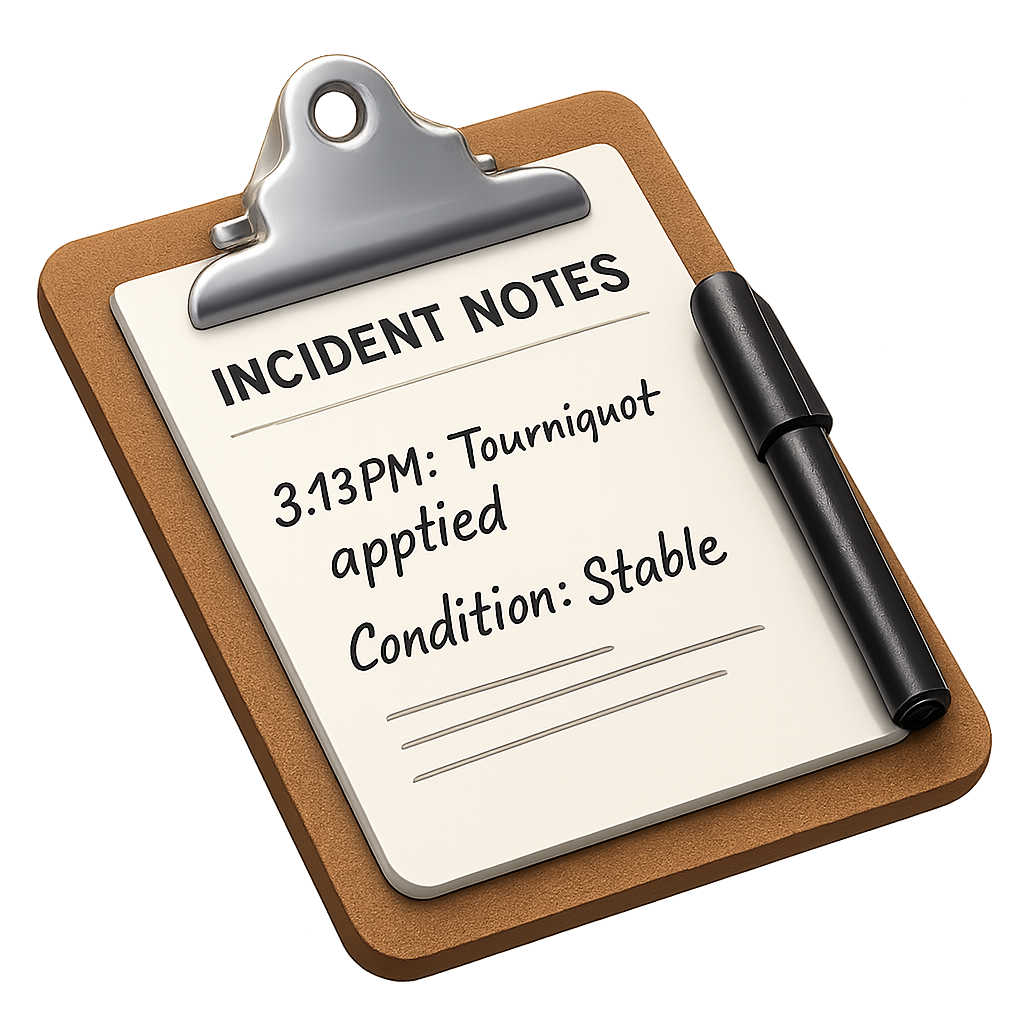
📝 2. Document Everything

Why:
Clear notes support your good‑faith actions if questions arise later
Document:
  • Time started
  • Actions taken (e.g., "tourniquet left thigh 3:12PM")
  • Condition: arrival vs. handoff
  • Witnesses present
  • hospital-emergency-department
    When EMS took over
Pro Tip:
Write tourniquet time on the tourniquet's built‑in label, on the device, or on skin with a pen/marker

🎓 3. Stay Within Your Training

Why:
Exceeding scope = forfeit protection
Examples:
Stop the Bleed training → tourniquet = protected
Untrained → 911 dispatcher‑guided CPR = protected
YouTube‑trained → needle decompression = not protected
Untrained? Stick to:
911 | direct pressure | AED (it guides you) | safety positioning

🛡️ 4. Insurance Backup

Check Your Coverage:
  • Homeowner/renter policies: Some may offer liability coverage; review your specific policy
  • Workplace: Notify employer if you helped at work
  • Professionals off‑duty: Check if liability covers off‑duty aid
Note: Good Samaritan law = primary shield. Insurance = backup layer.

📚 5. Get Trained

Why:
  • Better outcomes (confident, effective)
  • Required for full immunity in 8 states (CT, IL, KS, KY, MI, MO, NY, RI)
  • Strengthens "reasonable person" defense everywhere
Recommended Training:
Training Length Covers Link
Stop the Bleed ~1 hour Tourniquets, wound packing Find a Course
CPR/AED 2‑4 hours CPR, AED, choking AHA / Red Cross
TECC Civilian Advanced Bleeding, airway, trauma MED‑TAC Training

⚖️ 6. Act in Good Faith

Good Faith =
Genuine intent to help | Not reckless | Doing your best
Defeats Good Faith:
  • Intoxicated
  • Accept payment
  • Ignore safety warnings
  • Experimentation
Bottom Line: Trying to save a life + acting reasonably = protected.

🚨 7. Don't Abandon

Once Started, Continue Until:
  • EMS takes over
  • Physically unable
  • Scene unsafe
  • Person recovers/refuses
Abandonment:
  • Quit CPR when tired (others available)
  • Apply tourniquet, leave before EMS
Best Practice: See it through. Brief EMS: "Tourniquet left leg 3:15. Bleeding controlled."

Your Questions, Answered

Q1: Can I still be sued?

Short Answer:
Technically yes. Practically? Extremely rare—and you'll win.
The Data:
506 cases reviewed → only 3 alleged harm from CPR. Far more sued for not helping.
You're protected if:
  • Good faith
  • No payment
  • Within training
  • Not grossly negligent
Most lawsuits dismissed early on immunity.

Q2: Do I need professional training?

Short Answer:
Most states: No. Training helps but isn't required.
Most States: 48/50 protect untrained AED users. Standard adjusted for bystanders.
Training Matters in:
  • AED: RI, IL, NY require training for full immunity
  • Bleeding control: CT, IL, KS, KY, MI, MO may require training
Bottom Line: Get Stop the Bleed for bleeding control + CPR for cardiac arrest—better outcomes + stronger protection.

Q3: What if I make a mistake?

Short Answer:
Ordinary mistakes = protected. Only gross negligence defeats immunity.
✅ Protected:
Broken ribs (CPR) | Wrong compression rate | AED pad initially misplaced (then corrected)
❌ NOT Protected:
Intoxicated | Surgery without training | Ignoring AED warnings | Deliberate harm
Key: Law expects imperfection under stress. Trying genuinely = protected.

Q4: Am I required to help?

Short Answer:
Most states: No. Three states require "reasonable assistance."
Duty to Rescue States: MN, VT, RI
(Calling 911 satisfies requirement)
Always Have Duty:
On‑duty EMS/police/fire | Lifeguards | Teachers | Crash drivers
Bottom Line: Most places = choice. If you help, you're protected.

Q5: What emergency care is protected?

Short Answer:
Generally yes, but varies by state.
Universal:
  • CPR
  • AED (federal + state)
  • 911 dispatch instructions
Usually Protected:
  • Bleeding control
  • Airway management
  • Basic trauma care
State Variations:
  • Oklahoma: Explicitly names bleeding control
  • California: Covers "nonmedical" rescue
  • 6 states: May require training for bleeding control
Bottom Line: Basic + recognized interventions = strongest protection. Check your state above.

Q6: What do I do after providing care?

Short Answer:
Hand off → Document → Self‑care
Checklist:
  1. Brief EMS: What you found | What you did | Current condition
  2. Document: Time, actions, witnesses
  3. Notify workplace (if applicable)
  4. Self‑care: Trauma response is normal—talk to someone
  5. DON'T accept payment → forfeits protection

Ready to Take the Next Step?

You know the law. Now turn knowledge into action.

Learn to Help Safely & Confidently

TECC for Civilians
Evidence‑based trauma training from SOF veterans and physicians.
  • Civilian First Care Provider: Armed civilians
  • First Responders with Duty to Act: Security, law enforcement, lifeguards
  • Medical Provider: Tactical medics
Explore TECC Training
Stop the Bleed (Free)
1‑hour courses: tourniquets, wound packing, direct pressure.
Find a Course

Have the Tools When Seconds Count

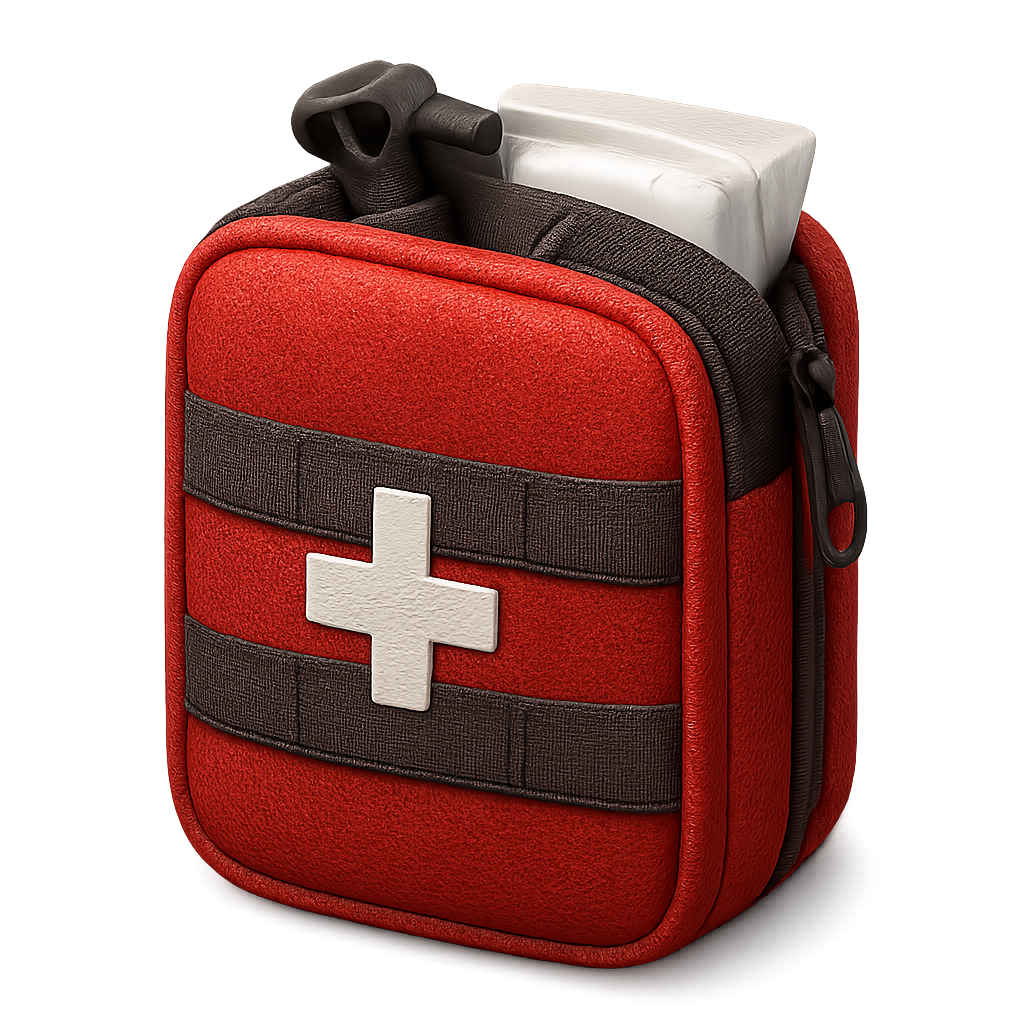
Physician‑designed, SOF‑tested bleeding control kits.
Use Case Kit Link
🏠 Home/Vehicle Public Access INDIVIDUAL Blutungskontrollset - Vakuumversiegelt Shop
🎒 Outdoor/Travel SOLO Erste-Hilfe-Set Shop
🏢 Workplace/School Shop
Browse All Kits
Knowledge Protection Tools
The biggest barrier to saving lives? Fear.
Now you know: The law is on your side.
Shopping cart

Your cart is empty.

Return to shop
Link copied to clipboard