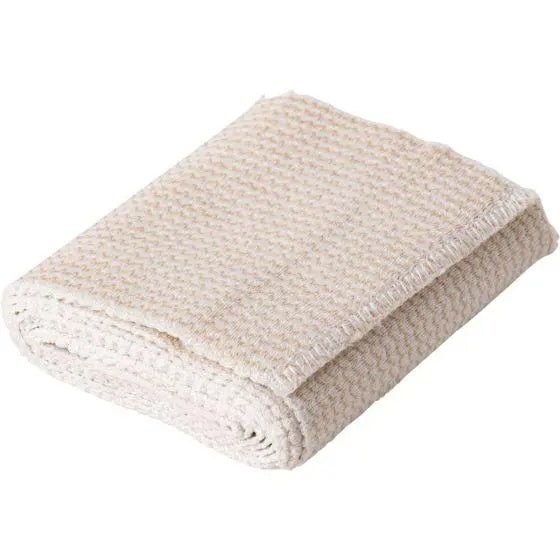
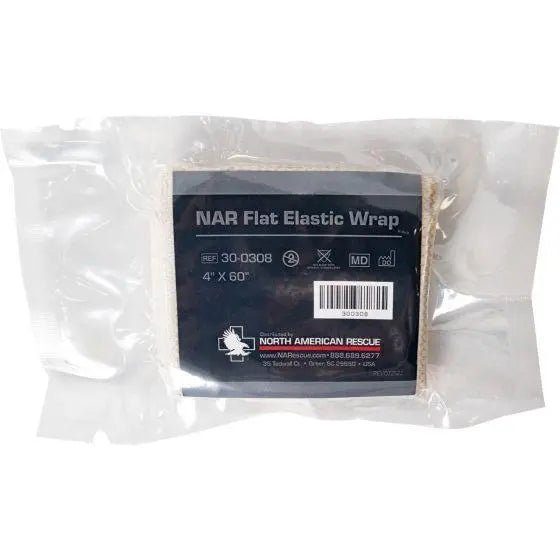
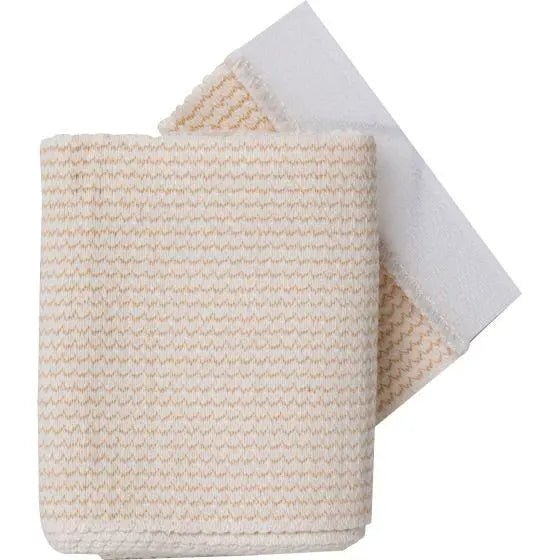
What is the difference between the NAR Flat Elastic Wrap and the standard NAR Elastic Wrap Bandage?
Both are 4 in. wide, latex-free elastic compression wraps that stretch to 5 yards and use a hook closure. The only difference is the packaging format: the standard NAR Elastic Wrap (rolled) has a 2 in. diameter cylindrical profile. The Flat Elastic Wrap (SKU 30-0308) is vacuum-sealed in a flat configuration measuring approximately 4.25 in. × 2.75 in. × 0.875 in. at 2.0 oz. The flat version is designed for kits where a rolled bandage creates space, stacking, or closure problems. Both perform identically when deployed.
What kit configurations benefit most from the flat elastic wrap format?
The flat format is most beneficial in plate carrier IFAKs with fixed flat compartments, slim cummerbund medical inserts, tightly-organized first responder kits where cylindrical items create dead space, and any pouch where the 2 in. diameter of a rolled bandage prevents clean pouch closure. Flat vacuum-sealed bandages stack perfectly next to flat-packed ETDs, flat OLAES or CTB bandages, and flat gauze packages — creating efficient, organized kit layouts without wasted space.
Is the NAR Flat Elastic Wrap useful for wound dressing reinforcement?
Yes. After applying a primary pressure bandage (ETD, Israeli bandage, OLAES), the flat elastic wrap can be applied over it to add additional circumferential compression, particularly if the primary dressing's securing mechanism is not generating adequate pressure. The 5-yard stretch provides ample length for multiple firm wrapping passes over most extremity wound sites. The hook closure secures without clips that could shift or fail. The flat pack format means it is always available in the flat-kit configurations where additional compression is often needed most.
Can the NAR Flat Elastic Wrap be used for splinting?
Yes. The 4 in. wide, 5-yard flat elastic wrap is well-suited for securing improvised splints to injured extremities during field treatment and evacuation. Wrap the splint and injured limb circumferentially with overlapping passes, applying tension for secure immobilization. The hook closure locks the final pass without requiring clips or tape. For fractured forearms and lower legs in particular, a 4 in. elastic wrap provides secure splint retention without the over-pressure risk of rigid circumferential bandaging.
How does the flat elastic wrap open in the field?
The flat vacuum-sealed package uses NAR's Red-Tip Technology tear notches — the same opening system on NAR's entire flat-packed bandage product line. Pull the red-tipped corner notch to tear the vacuum seal in a single motion, which allows the flat package to be opened one-handed even with gloves. The elastic wrap then deploys directly from the opened package, ready for immediate use. The flat packaging does not spring open when the seal is broken — it opens cleanly to reveal the folded wrap.