


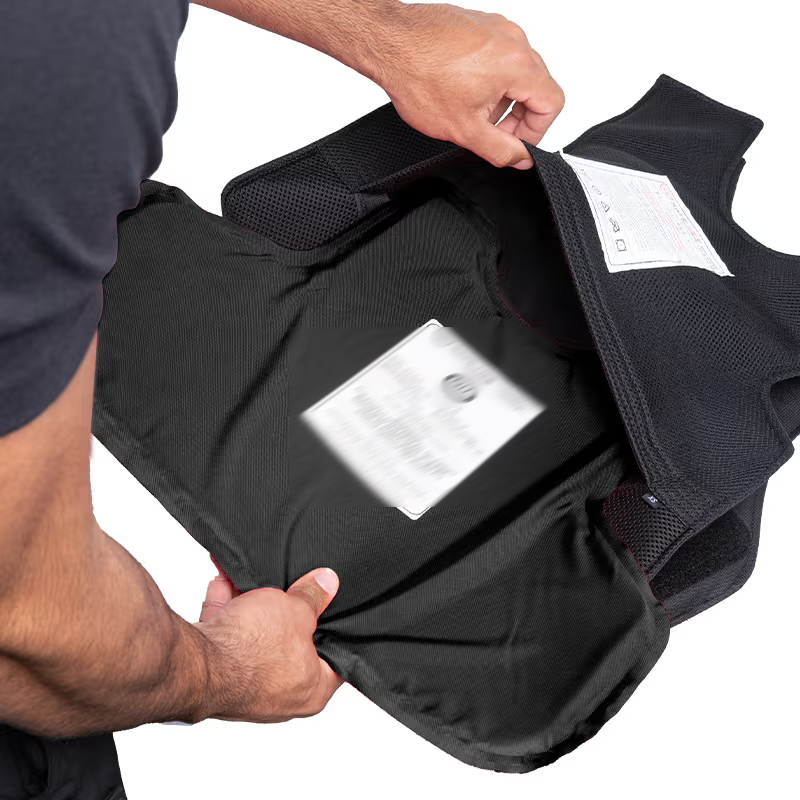

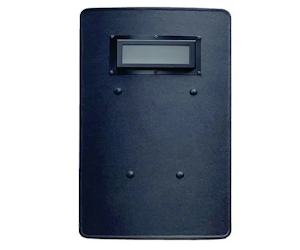


The Chase Tactical TITAN III is a stand-alone, multi-hit rifle-rated ballistic shield built for law enforcement, tactical teams, and rescue task forces operating in the warm zone. The UHMWPE core and anti-spall polyurea exterior reduce weight while maintaining NIJ 0108.01 Level III protection, with additional published test data commonly referenced as “Level III+.”
Key Specifications
| Specification | Detail |
|---|---|
| Manufacturer | Chase Tactical (Made in USA, Berry Compliant) |
| Threat Level | NIJ Standard 0108.01 — Level III, stand-alone, multi-hit |
| Ballistic Core | UHMWPE composite |
| Exterior / Spall Management | Polyurea exterior with Rhino Extreme 1150Fr anti-spall coating |
| Coverage | 20" × 34" single-curve geometry |
| Weight (by configuration) | 16 lb (no viewport) | 18 lb (with 4" × 10" viewport) |
| Handle | Ambidextrous C-handle (standard) |
| What’s Included | Shield, C-handle, quick-release neck strap, carry strap, carry bag |
| Typical Lead Time | 4–5 weeks from order |
Product Overview
The TITAN III is built for one job: provide rifle-rated cover that a point officer can actually hold and maneuver for the duration of a real incident. UHMWPE construction keeps the shield in the 16–18 lb range (depending on viewport selection), which directly improves endurance, movement speed, and the ability to maintain proper high-and-aggressive shield posture during long callouts.
Operationally, the TITAN III is most valuable where the team must move from cover to contact, hold a corner, or extract a casualty under a residual rifle threat. In a Rescue Task Force (RTF) model, the shield creates a hard-cover work space that allows hemorrhage control and casualty packaging to occur sooner—without waiting for the entire scene to become cold.
How to Deploy (Field-Focused)
- Threat-match: Confirm the expected threat is within NIJ Level III performance (not armor-piercing rifle threats).
- Grip and posture: Acquire the ambidextrous C-handle and keep the top edge high at helmet line.
- Angle management: Slightly cant the ballistic face toward the threat axis to reduce exposed edges.
- Team integration: Stack trailing operators directly behind the shield holder; maintain physical contact for spacing.
- RTF workflow: Place the medic immediately behind the shield with hemorrhage control staged for rapid access.
How the TITAN III Compares
- Versus steel rifle shields: Substantially lighter for comparable coverage, with a focus on fragmentation/spall management.
- Versus entry-level UHMWPE shields: Designed around published test data and duty-centric handling, rather than “lowest weight at any cost.”
- Viewport vs no-viewport: Choose the viewport when the shield operator must visually ID threats; choose no-viewport when the priority is reduced weight and maximum uninterrupted ballistic surface.
FAQ
What does “Level III+” mean here?
The platform is described as NIJ 0108.01 Level III with additional published test results against other rifle threats beyond the baseline M80 ball profile. Always match procurement decisions to your agency’s threat assessment and test documentation.
Is this shield CoTCCC-recommended?
CoTCCC recommendations apply to medical devices and supplies used in casualty care. A ballistic shield is a force-protection platform that can enable earlier care under threat but is not itself a CoTCCC-reviewed medical product.
Viewport or no viewport?
Choose a viewport when the shield operator must visually identify and potentially engage threats from behind cover. Choose no viewport when the shield is primarily used for movement and casualty extraction where reduced weight and uninterrupted ballistic area are prioritized.
All products sourced from the actual brand manufacturer or authorized master distributors. CoTCCC recommendation status verified where applicable. Ships from MED-TAC International, Pembroke Pines, FL — clinician-founded, veteran-led, SDVOSB-certified.
Specifications coming soon. Contact us for detailed product information.
FREQUENTLY ASKED QUESTIONS


