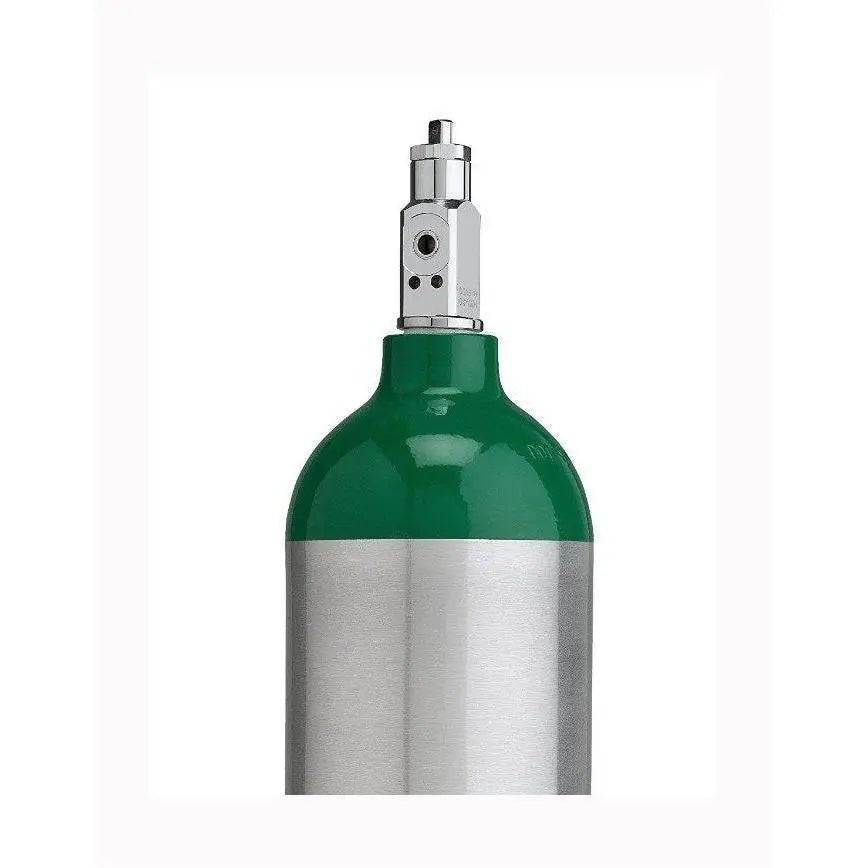
How long will a Size D oxygen cylinder last?
The Size D cylinder contains approximately 415 liters (14.6 cubic feet) of medical oxygen. Duration depends on flow rate: at 15 LPM (non-rebreather mask or BVM reservoir) approximately 27 minutes; at 10 LPM (NRB mask) approximately 41 minutes; at 6 LPM (simple face mask) approximately 69 minutes; at 2 LPM (nasal cannula) approximately 207 minutes. Always check cylinder pressure before patient use — a partially depleted cylinder will have shorter duration.
Does the Size D Oxygen Cylinder come filled?
The MED-TAC Size D Oxygen Cylinder ships empty and must be filled with medical-grade oxygen by an authorized medical gas supplier in your area before clinical use. This is standard for oxygen cylinder sales due to shipping regulations for compressed gases. After receiving the cylinder, contact your local medical gas supplier or medical gas distributor to have it filled. Cylinder fill cost and availability vary by location.
What regulator do I need for this cylinder?
The Size D Oxygen Cylinder uses a CGA870 post valve — the U.S. standard for portable medical oxygen cylinders. It requires a CGA870-compatible oxygen regulator. The MED-TAC Mini O2 Regulator (MEDTAC1110) is fully compatible and provides 0–15 LPM adjustable constant flow. The cylinder wrench included with the regulator is used to open and close the cylinder valve.
Can I use this cylinder with a non-rebreather mask and a BVM?
Yes. The Size D cylinder with a CGA870 regulator set to 10–15 LPM can supply oxygen to a non-rebreather mask (for spontaneously breathing patients) or to a bag valve mask's reservoir bag inlet (for patients requiring assisted ventilation). At 15 LPM, plan for approximately 27 minutes of oxygen delivery — sufficient for most ground transport scenarios. For air medical transport or longer transports, consider a larger cylinder or calculating oxygen requirements before departure.
What are the safety requirements for storing and transporting a medical oxygen cylinder?
Oxygen cylinders must be stored upright and secured against falling, in a well-ventilated area away from heat sources, sparks, and open flames. Do not store in enclosed vehicle compartments for extended periods without ventilation. During transport, cylinders must be secured in a cylinder holder or bracket to prevent rolling or impact. Follow CGA (Compressed Gas Association) and DOT regulations for compressed medical gas handling. Never use oil or grease on oxygen fittings. Inspect cylinders regularly for damage, corrosion, or valve defects.