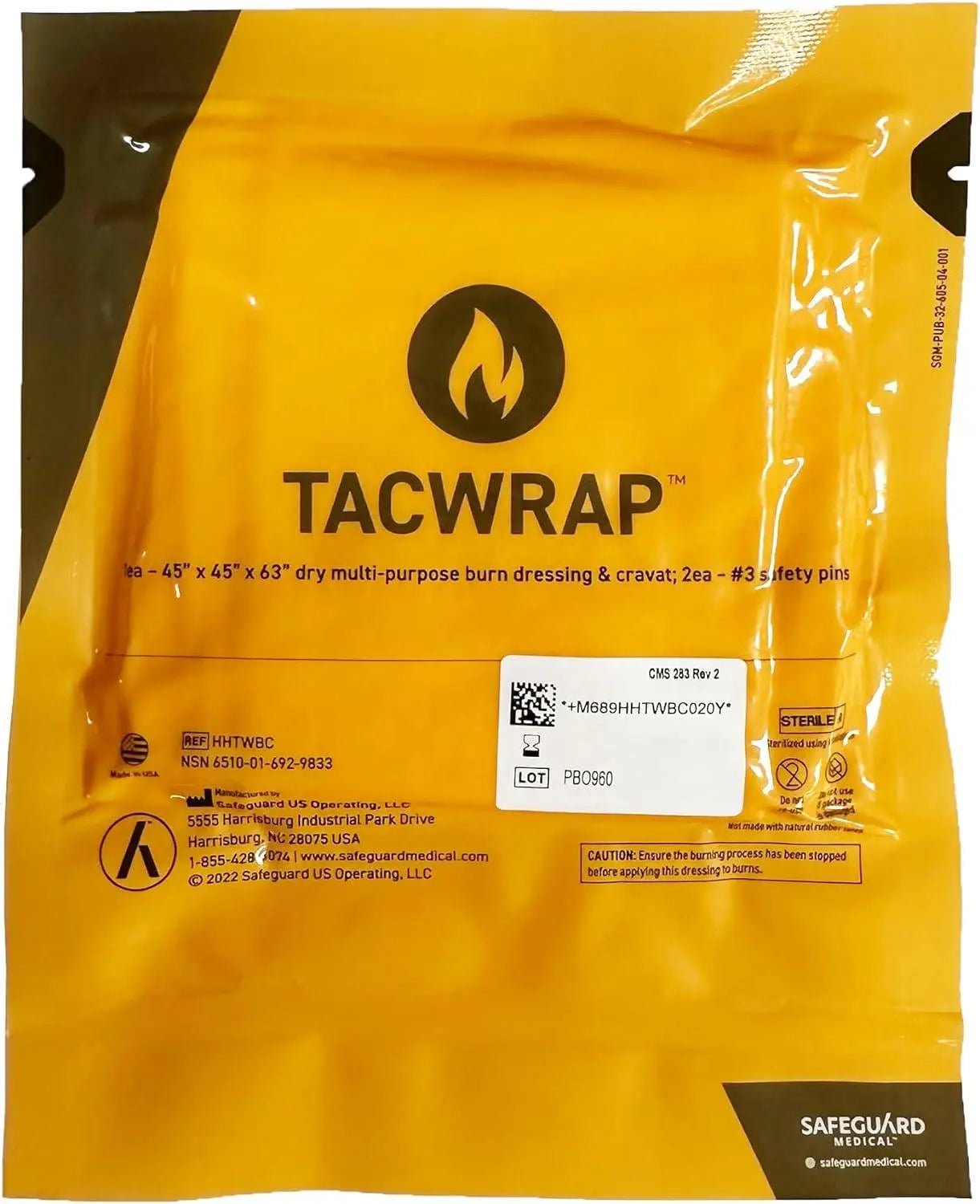
Does the TACWrap™ meet TCCC burn treatment guidelines?
Yes. The TACWrap™ Multi-Purpose Burn Cravat dressing material meets TCCC (Tactical Combat Casualty Care) burn management guidelines as established in November 2009. This compliance makes it suitable for military individual first aid kits and medic bags where TCCC-aligned burn treatment is required. It provides a dry, non-adherent sterile cover for burn wounds in tactical environments.
What makes TACWrap™ different from a regular triangular bandage?
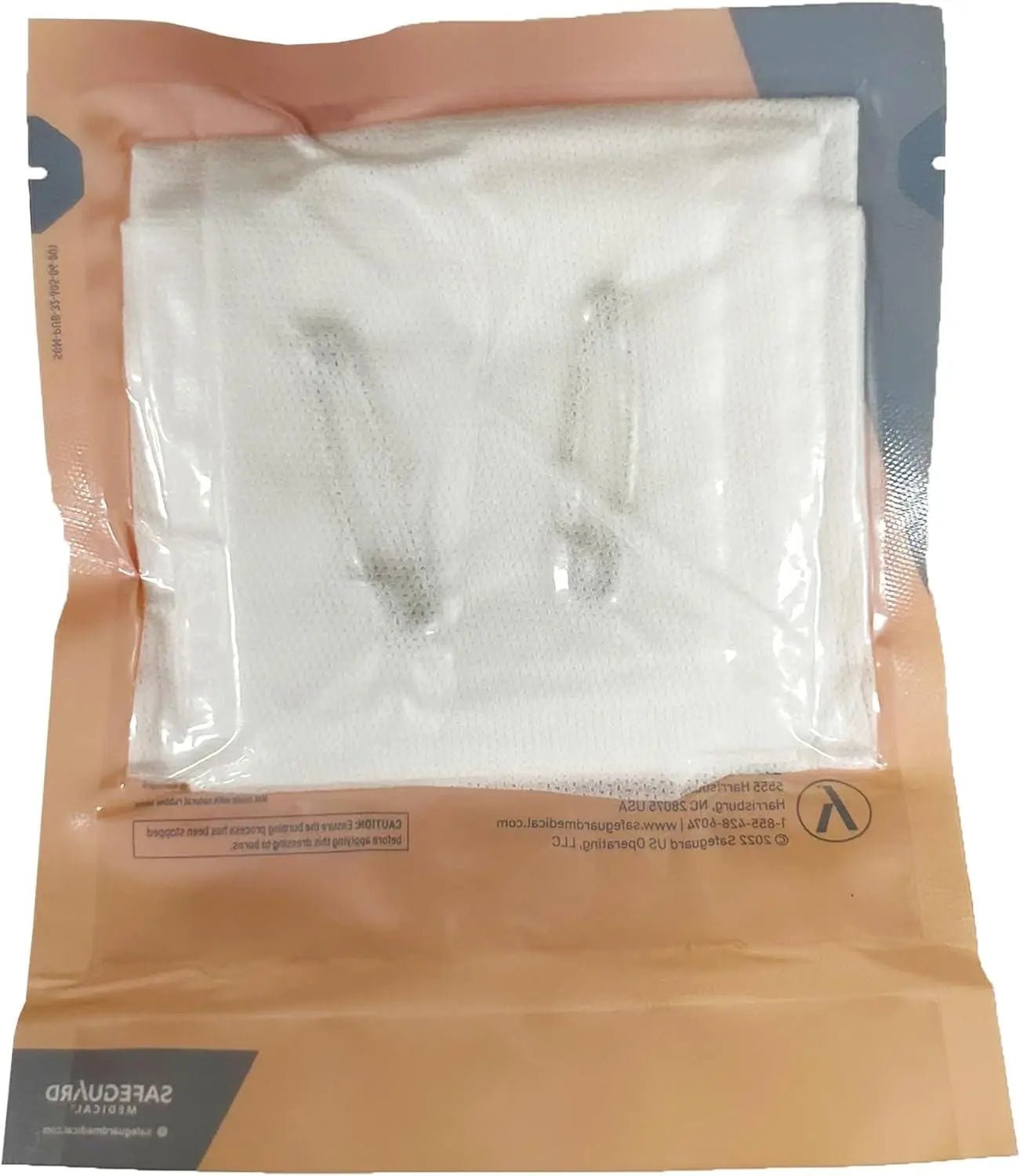
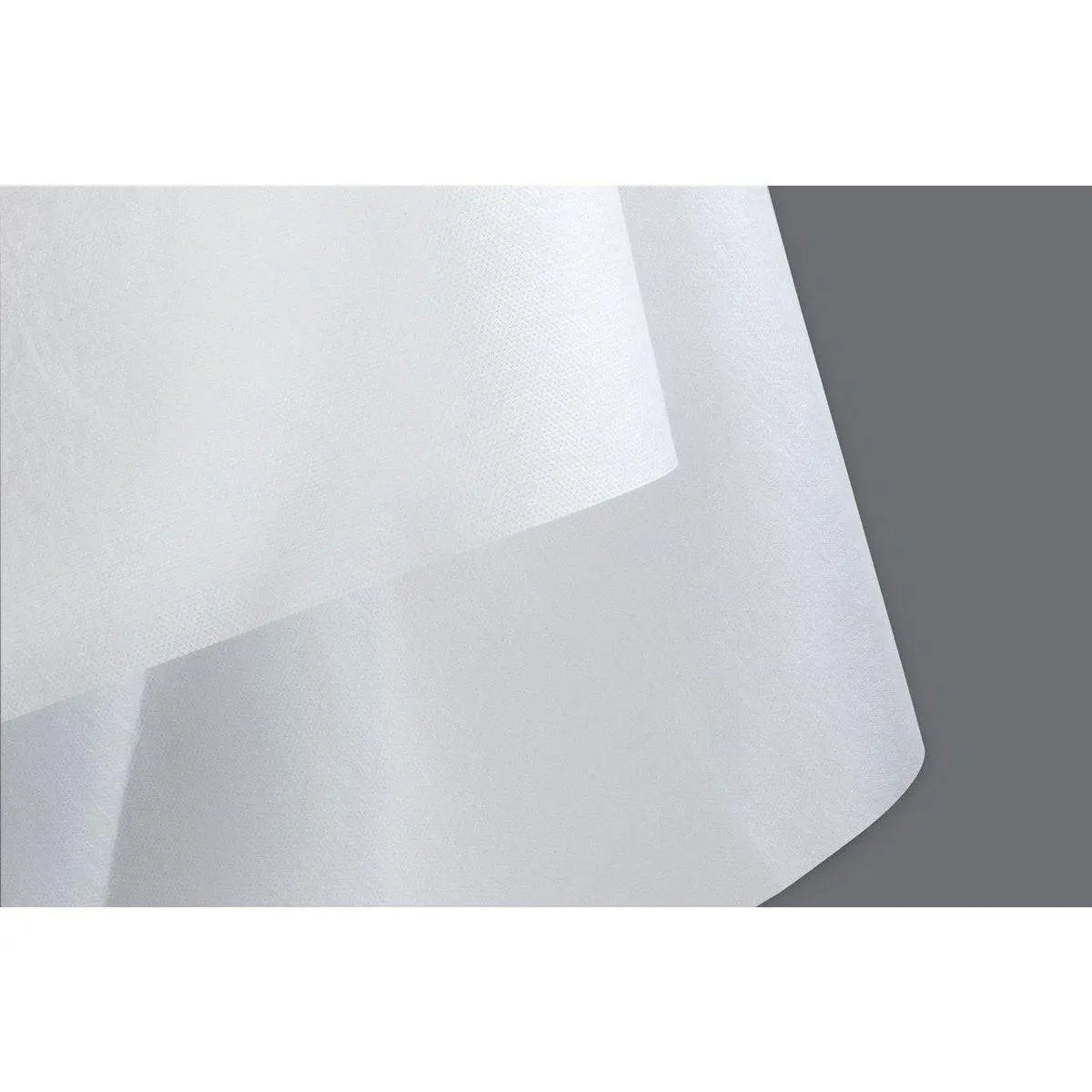
Unlike standard cotton triangular bandages, TACWrap™ is manufactured from 100% spunbond polypropylene — a non-adherent, synthetic material that will not stick to burn wound surfaces. It is vacuum-packaged sterile in a rugged 5 mil barrier bag, maintaining sterility in austere field conditions. Standard cotton cravats are not sterile and can adhere to weeping burn wounds, causing significant pain and tissue damage upon removal.
What are the dimensions of the TACWrap™ cravat?
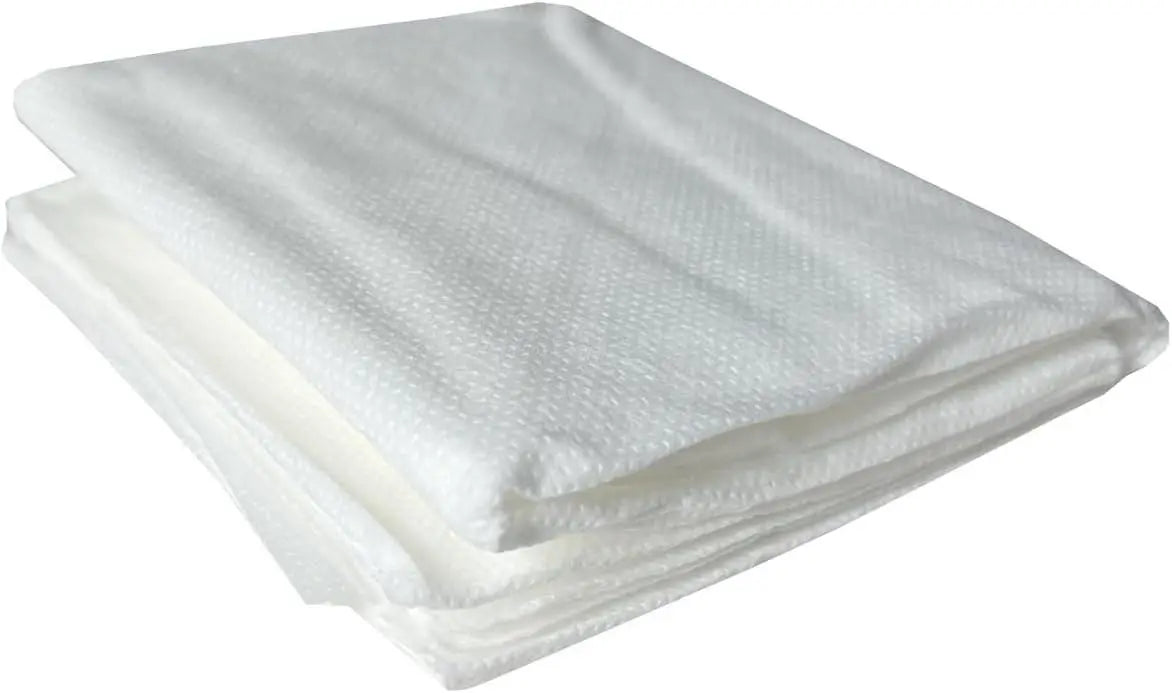
The TACWrap™ is a triangular cravat measuring 45" × 45" × 63" when deployed — large enough to cover major torso and extremity burns, create a full arm sling, or provide substantial wound coverage. Packaged, it compresses to just 4.6" × 4.6" × 0.5" and weighs 1.7 oz, making it highly space-efficient for IFAK and trauma kit integration.
Can TACWrap™ be used for injuries other than burns?
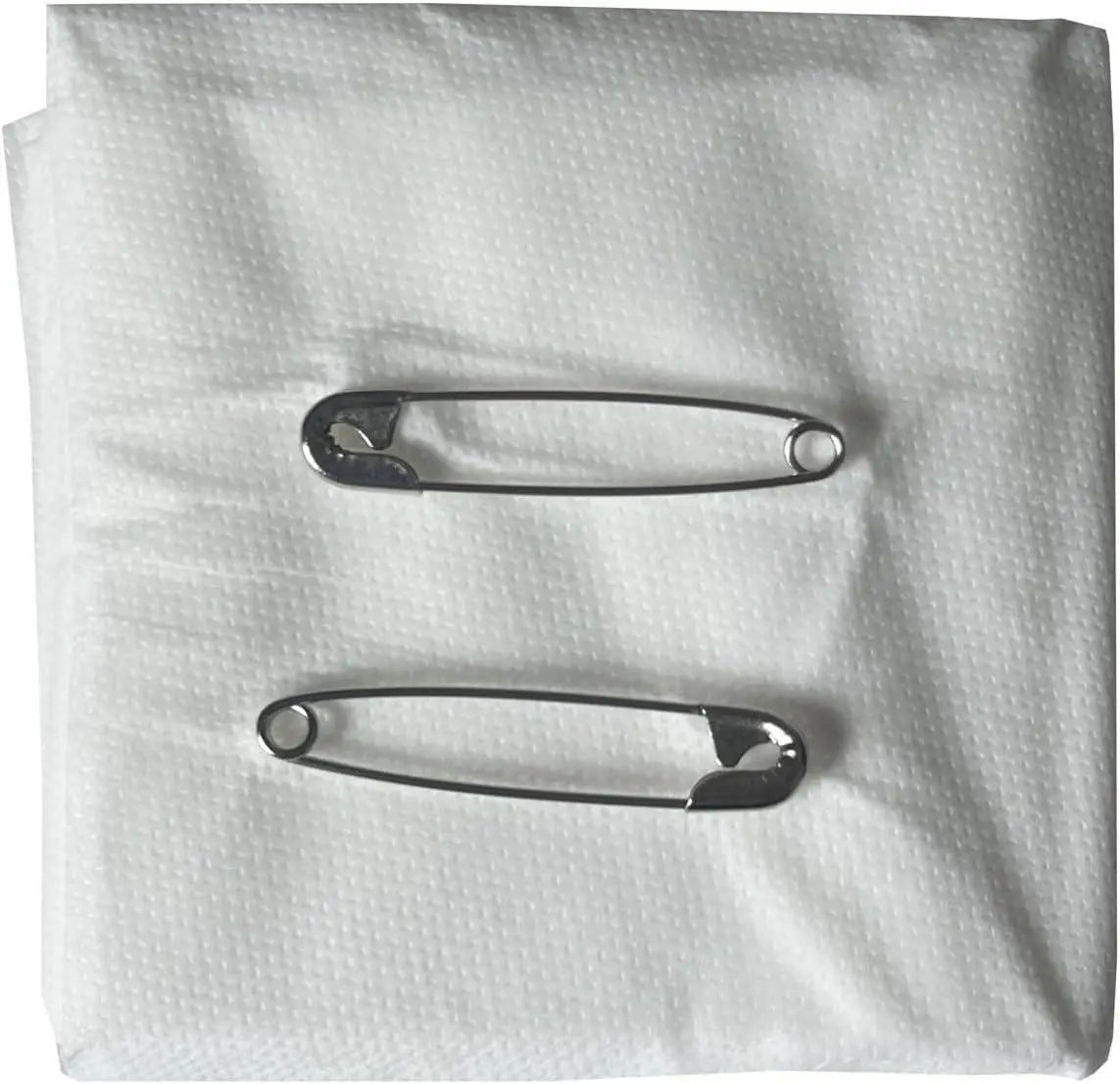
Yes. TACWrap™ is specifically designed as a multi-purpose trauma item. In addition to burn coverage, it functions as a triangular bandage for arm slings, a swathe for shoulder immobilization, an improvised sterile field dressing for open wounds, a secondary retention layer over primary wound dressings, and a splint padding material. The included two #3 closed safety pins support rapid securing in sling-and-swathe configurations.
Is TACWrap™ latex free and safe for all patients?
Yes. TACWrap™ is latex free and made from hypoallergenic spunbond polypropylene material, making it appropriate for patients with latex allergies or sensitivities. It is sterile, single-use, and non-toxic. The non-adherent properties mean it will not disrupt wound surfaces or cause additional tissue trauma during application or removal.