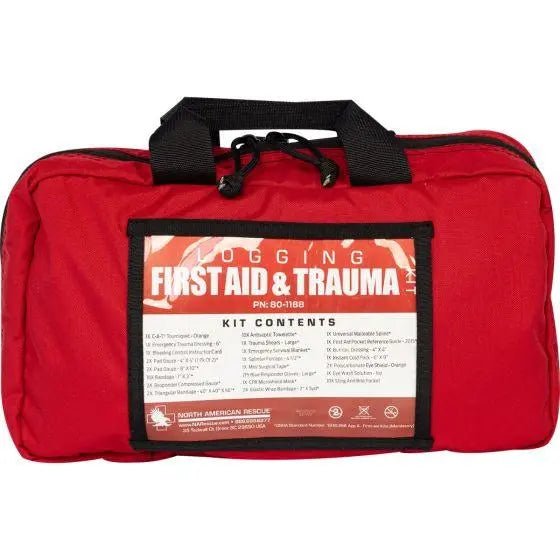
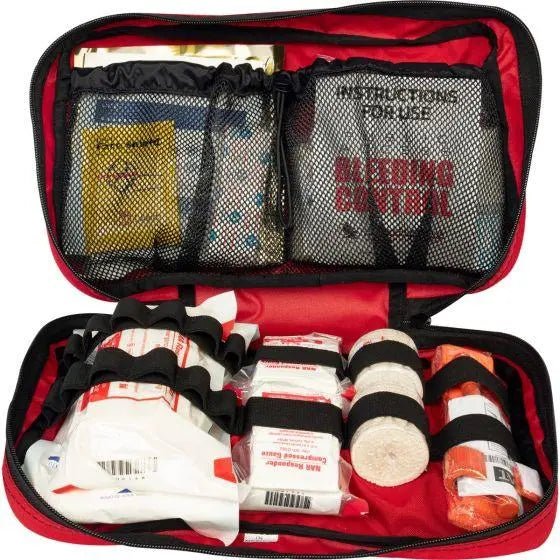
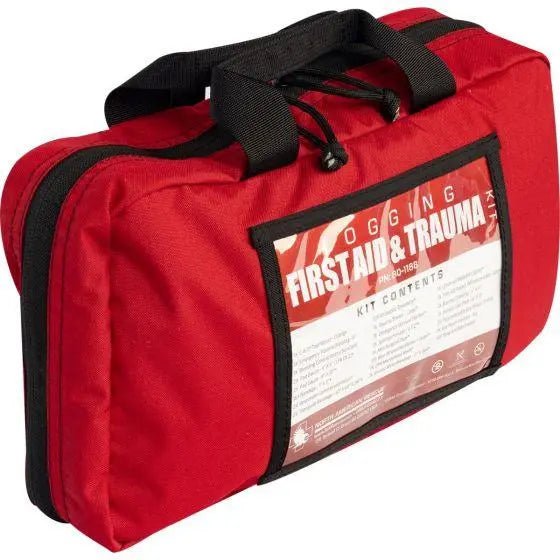
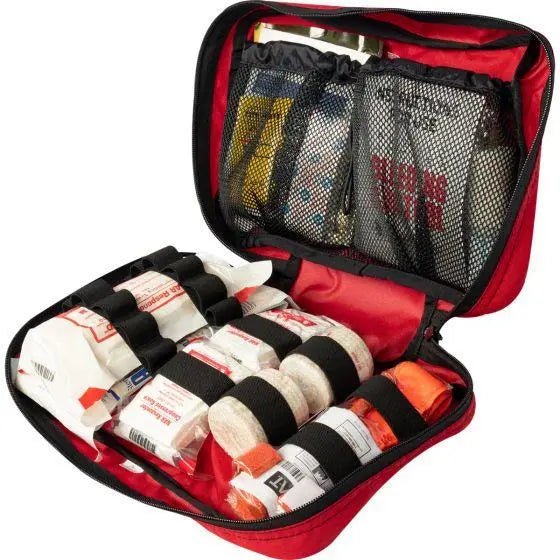
What is the difference between the soft case and hard case Logging Kits?
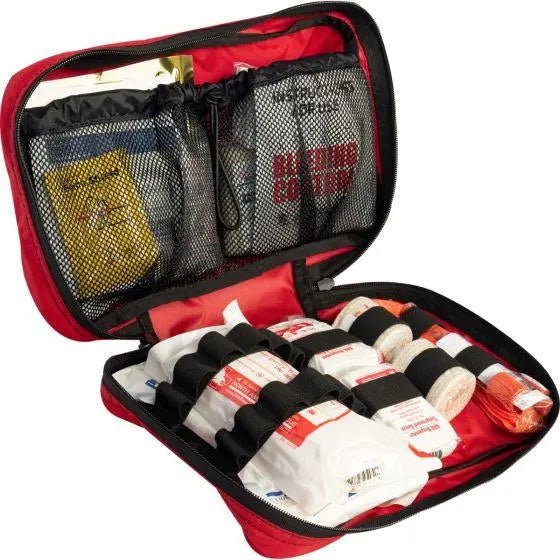
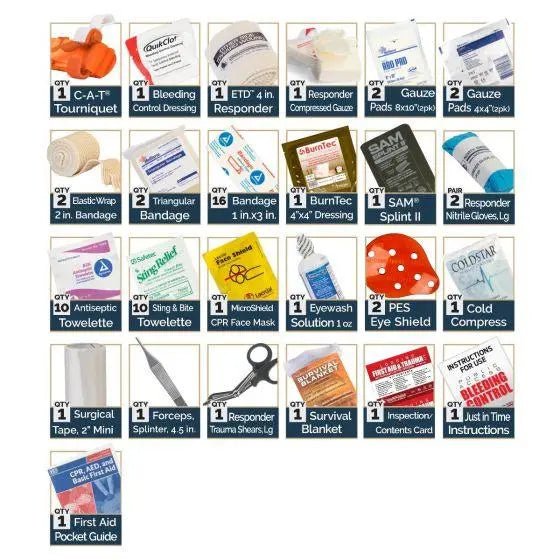
The contents are nearly identical — both include a C-A-T® Tourniquet, ETD, compressed gauze, SAM Splint, BurnTec dressing, CPR mask, survival blanket, eye shields, and a full first aid supply complement. The key difference is the container: the hard case is a rigid dual-latched Type IV ANSI container designed for extreme durability and rapid open access, while the soft case is a compact zippered nylon bag with 550 cord pulls that stores in tighter spaces. The soft case is also available in only two versions (Basic and with Bleeding Control Dressing), versus three for the hard case.
Does the soft case Logging Kit meet OSHA logging industry requirements?
Yes. The NAR Logging First Aid & Trauma Kit – Soft Case exceeds OSHA Standard 1910.266 App A (First-aid Kits, Mandatory) for the logging industry. This makes it compliant for use as the required worksite first aid kit on logging operations, while providing additional trauma-level capability (tourniquet, ETD) beyond what OSHA mandates.
What is the Just-In-Time Bleeding Control instruction card?
The Just-In-Time Bleeding Control instruction card included in the kit provides illustrated step-by-step instructions for tourniquet application and wound packing — designed to be used by bystanders with no prior medical training during an active bleeding emergency. This card is critical for logging kits because crew members may not have formal first aid training, but can still save a life if given clear instructions at the moment of need. It is a NAR-proprietary instructional resource included in several of their trauma kits.
Why does a logging kit include an eye wash solution and eye shields?
Logging operations generate significant eye hazard risk — chainsaw wood chips, sawdust, bark fragments, and chemical splash from fuel or lubricants are common causes of eye injury on logging sites. The 1 oz eye wash solution and polycarbonate eye shields address post-injury eye decontamination and protection. Eye injuries that go untreated or inadequately flushed in the field can progress to permanent vision damage, making these items important components of a logging-specific first aid kit.
Can non-medically trained crew members use this kit effectively?
Yes. The kit is specifically designed with this in mind. The NAR Just-In-Time Bleeding Control instruction card provides step-by-step tourniquet and wound care guidance for untrained users. The kit organization and labeled pouches help locate the right items quickly. For workplaces like logging operations where formal medical training may not be universal, having a kit with clear instructions and intuitive organization is essential for bystander response capability.
Does the Logging Soft Case meet OSHA 1910.266?
Yes. The kit exceeds OSHA Standard 1910.266 Appendix A for logging industry first-aid kits. The C-A-T® tourniquet and Just-In-Time Bleeding Control card go beyond the OSHA minimum requirement.
What SKUs are available for the soft case?
Basic (SKU 80-1188) and w/Bleeding Control Dressing (SKU 80-1189). The BCD version adds a hemostatic dressing for wound packing. Both configurations exceed OSHA 1910.266 App A.
Is the C-A-T® in this kit CoTCCC-recommended?
Yes. The Combat Application Tourniquet (C-A-T®) included in the Logging Soft Case is CoTCCC-recommended as the standard extremity tourniquet for life-threatening extremity hemorrhage.
How often should the soft case be inspected?
Inspect monthly and after any deployment. OSHA 1910.266 requires employers to maintain first-aid kits — use the included inspection card to document each inspection.
Can multiple units be ordered for fleet compliance?
Yes. Contact MED-TAC International for quantity pricing and procurement for logging fleet compliance programs. NAR logging kits are available in quantity for commercial and government buyers.